New Export China: Translations across Time and Place in Contemporary Chinese Porcelain Art (University of California Press, 2023)
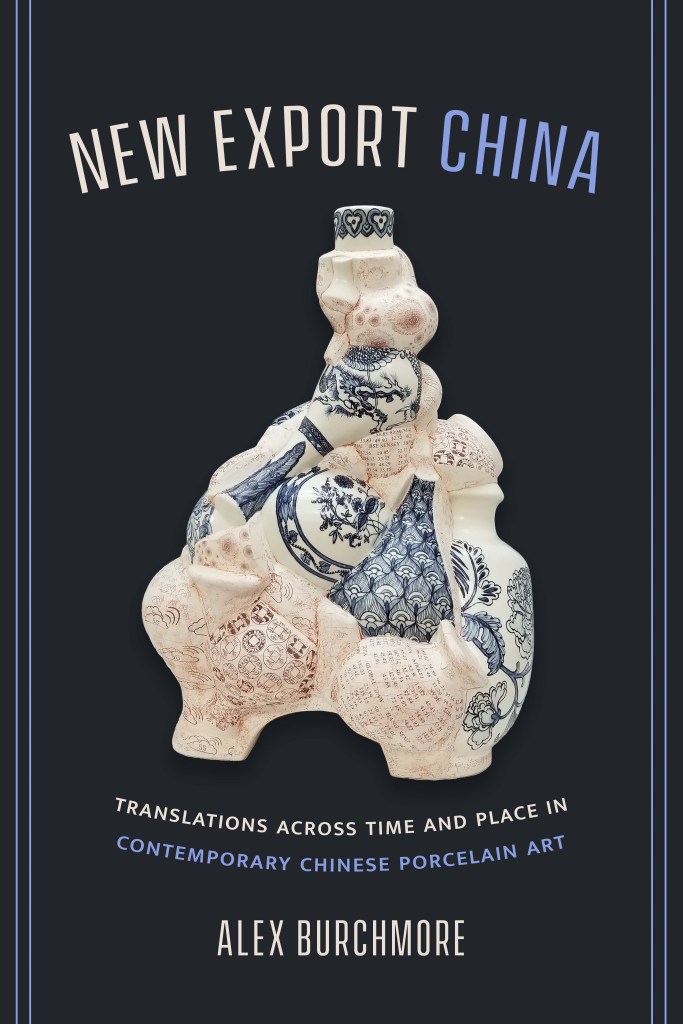
Why do so many contemporary Chinese artists use porcelain in their work? In New Export China, Alex Burchmore presents a deep dive into a unique genre of ceramic art to describe a framework for a broader art practice. Focusing on the work of four artists from the 1990s through the 2010s—Liu Jianhua, Ai Weiwei, Ah Xian, and Sin-ying Ho—Burchmore reveals how the materiality of ceramics has been used to highlight China’s role in global trade and to explore the function of this medium as a vessel for the transmission of Chinese art, culture, and ideas.
From its historical pedigree and transcultural relevance to its material allure and anthropomorphic resonance, porcelain offers artists a unique way to move between the global and the intimate, the mass produced and the handmade, and the foreign and the domestic. By dissecting both the legacy of porcelain export and current networks of exchange, Burchmore demonstrates why this ceramic practice is crucial to understanding the development of Chinese contemporary art.
Praise for New Export China:
Professor Jiang Jiehong, author of The Art of Contemporary China (Thames & Hudson, 2021): “In China, from the past to the present, ceramics is not just a material but a language. Alex Burchmore has insightfully translated this language and its variations, or accents, in contemporary Chinese art”
Professor Gao Minglu, author of Total Modernity and the Avant-Garde in Twentieth-Century Chinese Art (MIT Press, 2011): “Rather than simply extracting meanings from the artworks, Alex Burchmore tells us broader stories of China’s history, culture, and contemporary social life associated with the making of contemporary ceramic art. These are not aesthetic objects alone; rather, this is a conceptually oriented collective production full of the ambiguity between traditional symbolism and contemporary deconstruction”
Material Selves: Object Biographies and Identities in Motion (Bloomsbury Academic, 2024)
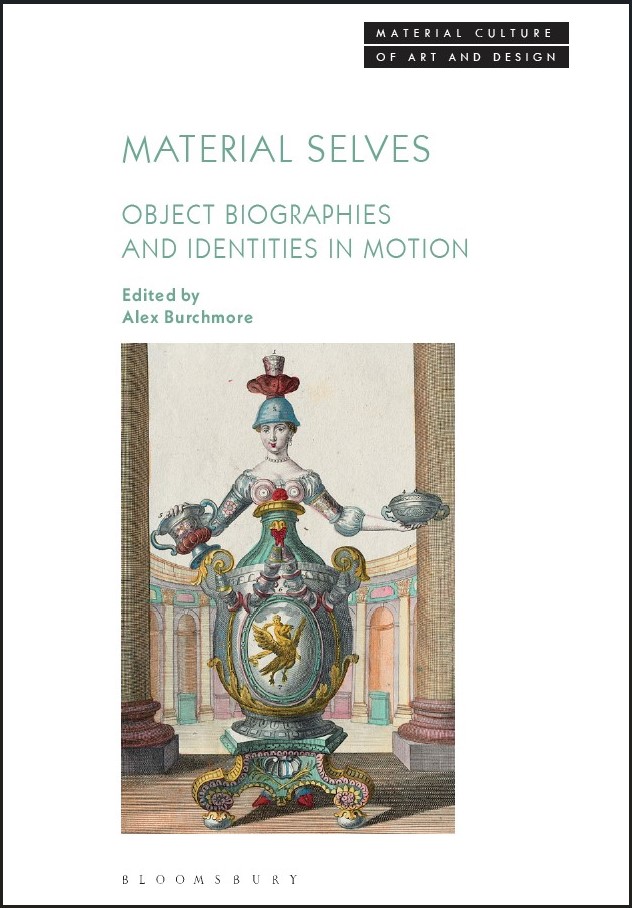
What do Persian robes of honour, 20th-century still-life painting, fur garments, and 18th-century porcelain all have in common? Prized, possessed and modelled, they highlight the deep connections we share with cultural objects.
Establishing new connections between people and things via artistic media and material culture, this highly interdisciplinary volume brings together both established and emerging scholars in the fields of art history, material culture, museum and heritage studies and literary studies to investigate the intersection of the personal with the material.
Raising vital questions of cultural identity, belonging and selfhood, Material Selves is the first book of its kind to consider the relationship between people and things across transcultural and transhistorical contexts. It employs innovative methodologies across ten chapters and critically expands on current models for understanding the dynamic relationship between people and things by tracing the central role objects have played in the construction, creation and performance of identity throughout history.
Structured around four key sections exploring biography and narrative; adornment and ornament; reclamation and intervention; and subjects and objects, the volume presents a global selection of case studies that explore, amongst other things, Margaret Olley’s enduring fame, the significance of the Khil’a in Safavid Persia and early modern Europe, and 17th-century French painter Charles LeBrun’s royal portraiture. Fusing these with contemporary theories of identity, the contributors provide analyses informed by posthumanism, the environmental humanities, race and gender. At the same time, they confront vital questions of identity, agency, and materiality, and highlight the way in which we use objects to tell stories, construct myths and make sense of our place in the world. In doing so, the book illuminates a wide range of cultural and chronological settings whilst giving close attention to the mobility of people and things between, across, and through time and place.
Praise for Material Selves:
Leora Auslander, Arthur and Joann Rasmussen Professor in the Departments of Race, Diaspora, and Indigeneity and History, University of Chicago: “Radically interdisciplinary and temporally and spatially expansive, this volume brilliantly refocuses our attention on the material, the tangible, and the embodied, yielding crucial new insights into the relationship between things and people”
Ian Hodder, Dunlevie Family Professor Emeritus in the School of Humanities and Sciences, Stanford University: “This vibrant cornucopia of object driven studies brings fresh perspectives to the study of human-thing relations. Employing a diversity of examples and theoretical outlooks, the interdisciplinary approach will stimulate research in material culture studies, archaeology and anthropology, museum and literary studies, sociology and media studies, as much as in art history”
Edward S. Cooke Jr., Charles F. Montgomery Professor of the History of Art, Yale University: “This wide-ranging series of essays, spanning historical dress, jewellery, and contemporary artistic expression, shifts scholarly attention from object-centred exposition to the more discursive construction of subjecthood. Through a series of relationships always in contextual flux, object and human biographies intertwine to reveal the formation of material selves”
The ‘Wonders’ that Basham Saw
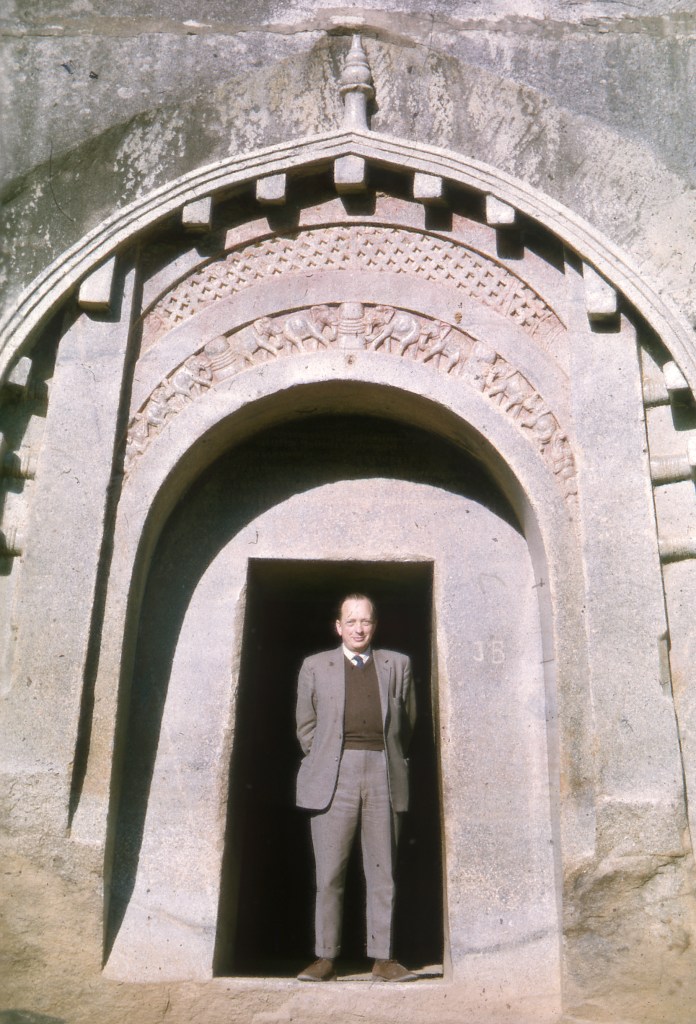
Led by Associate Professor Chaitanya Sambrani of the Centre for Art History and Art Theory at the Australian National University, and in collaboration with colleagues at the National Gallery of Australia, National University of Singapore, and Oxford University’s Ashmolean Museum, this project seeks to uncover and share the significance of an archive of images compiled by the late Professor A. L. Basham (1914-1986) during his tenure as Foundation Professor and Head of the Department of Oriental (later Asian) Civilisations at ANU (1965-1979).
Professor Basham helped set up the Faculty of Oriental (later Asian) Studies and played a pioneering role in teaching and research in this area, in Australia and internationally. His book The Wonder that Was India (1954) became a signal study in the field. Basham undertook extensive fieldwork in South Asia and studied several classical Indian languages. He had a deep interest in art and visual culture as an essential aspect of historical study, and was a keen photographer. His work parallels major scholarly investments made simultaneously by other scholars, including his Oxford contemporaries William Cohn (1880-1961), Douglas Barrett (1917-1992), and J.C. Harle (1920-2004), whose archives reside in the Ashmolean. The project also considers the role of Michael Sullivan (1916-2013), who worked in what was then the University of Malaya before moving to London and Oxford. The project revisits Basham’s visual archive alongside those of his colleagues, analysing them as key ingredients in the historiographical construction of ‘classical’ civilizations in Asia.
Chaitanya Sambrani, ‘The Basham Project at the Australian National University,’ The Asian Arts Society of Australia Review 27, no. 4 (December 2018): 24.
Provenancing Southeast Asian Ceramics from the Chau Chak Wing Museum’s Collection
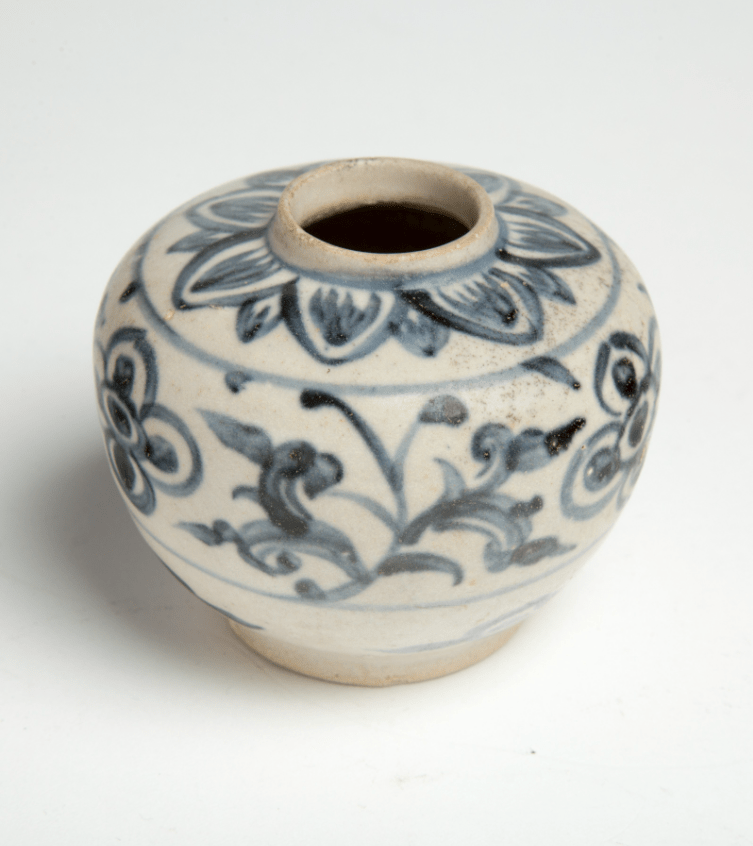
In collaboration with Dr James Flexner, Associate Professor in Historical Archaeology and Heritage; Dr Natali Pearson, Curriculum Coordinator for the Sydney Southeast Asia Centre; Dr Shuxia Chen, Curator of the China Gallery at the Chau Chak Wing Museum; and Dr Elizabeth Carter, Facility Manager of Vibrational Spectroscopy at Sydney Analytical, this interdisciplinary pilot project will bring together researchers from archaeology, heritage studies, art history and analytical chemistry to examine Southeast Asian ceramics in the collection of the Chau Chak Wing Museum. These objects are under-researched, with limited information on where they were produced or how they came to be in the collection.
The project will use innovative methodologies to produce a chemical profile that can provide information about place of origin, among other things, with a broader aim of improving the quality of the Museum’s catalogue data while also contributing to a better understanding of how ceramics produced in Southeast Asia have circulated in global networks. Our preliminary study has identified 28 objects of interest, primarily including stoneware and porcelain from China, Thailand, and Vietnam. Should this pilot project be successful in determining more information on the objects, there is scope to expand within the much larger Chinese and East Asian ceramic collections.
 alexburchmore.com